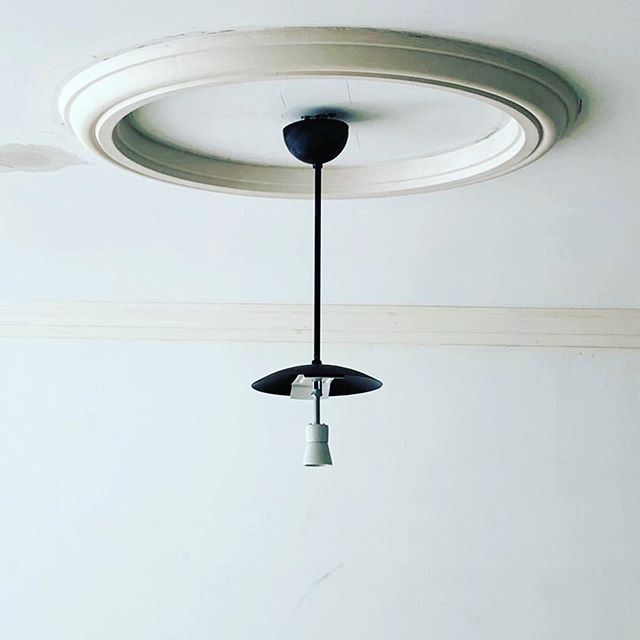
A ceiling rose can be one of the most striking architectural details within a room.
Traditionally positioned around a central light fitting, ceiling roses were designed to provide a decorative focal point while complementing the wider architectural character of an interior. Today, they continue to be used in everything from period properties and grand residences to contemporary luxury interiors.
At Pristine Plaster Mouldings, we believe a ceiling rose should do more than simply surround a light fitting. When correctly selected and proportioned, it can become an integral part of the architecture of the room.
What Is a Ceiling Rose?
A ceiling rose is a decorative plaster moulding installed on the ceiling, traditionally around a central light fitting or chandelier.
They can range from relatively simple circular designs to highly detailed ornamental pieces incorporating classical patterns, foliage, floral motifs, geometric detailing and other decorative elements.
Historically, ceiling roses became particularly prominent during the Victorian and Edwardian periods, when elaborate decorative plasterwork was an important feature of residential architecture.
Many of these traditional designs remain popular today.
Why Are Ceiling Roses Still Popular?
Although originally associated with traditional interiors, ceiling roses have never really disappeared from interior design.
Their continued popularity comes from their ability to add architectural character without requiring major structural changes to a room.
A ceiling rose can:
- Create a focal point around a light fitting
- Add architectural character
- Introduce symmetry and proportion
- Complement decorative cornices
- Enhance period properties
- Add detail to contemporary interiors
- Provide a sense of scale and grandeur
The key is selecting a design that works with the room rather than simply choosing the largest or most decorative option.
Choosing the Right Size
One of the most important considerations when selecting a ceiling rose is its size.
A ceiling rose that is too small can become lost within a large room, particularly where there are high ceilings or a substantial chandelier.
Conversely, an oversized rose can dominate a smaller room and make the ceiling feel visually crowded.
The size of the room, ceiling height, dimensions of the light fitting and surrounding architectural details should all be considered.
For larger reception rooms, dining rooms and entrance halls, a more substantial ceiling rose can create the presence required by the space.
For bedrooms or smaller rooms, a more restrained design may provide the right balance.
Consider the Light Fitting
The relationship between the ceiling rose and the light fitting is particularly important.
The rose should provide an appropriate visual frame around the fitting without making the chandelier or pendant appear disconnected from the architecture.
A larger, more ornate light fitting can often be complemented by a more substantial decorative rose, while a simpler pendant may work better with a restrained design.
The objective is to create a sense of proportion between the two.
Matching Your Ceiling Rose to Your Cornice
A ceiling rose doesn’t necessarily need to be identical in style to the cornice.
However, the two should feel compatible.
For a traditional interior, an ornate ceiling rose paired with a suitably detailed cornice can create a strong sense of architectural continuity.
In a more contemporary space, a simple ceiling rose can be combined with a clean-lined cornice to introduce subtle classical detailing without overwhelming the interior.
The relationship between the different elements is often more important than having an exact match.
Ceiling Roses in Period Properties
Ceiling roses are particularly effective within period properties where they can complement the original architectural character of the building.
Georgian, Victorian and Edwardian properties each have their own distinctive architectural language, and choosing an appropriate design can help maintain that sense of authenticity.
In restoration projects, matching an original or damaged ceiling rose can also be important.
Where an existing feature has been removed or deteriorated over time, a reproduction or bespoke plaster rose can help restore the room’s original character.
Ceiling Roses in Contemporary Interiors
Ceiling roses aren’t restricted to traditional properties.
A carefully selected design can also work beautifully within a contemporary interior.
The contrast between traditional plasterwork and modern furniture, lighting and finishes can create a sophisticated and highly considered aesthetic.
In these settings, a simpler rose may provide just enough architectural detail to give the room character without making the interior feel overly traditional.
Alternatively, a more elaborate rose can be used deliberately as a statement feature within an otherwise restrained space.
Ornate or Understated?
The amount of decorative detail you choose should reflect the character of the room.
An ornate ceiling rose can introduce a sense of grandeur and formality, particularly in large reception rooms and period interiors.
A simpler design can provide a more subtle architectural finish.
Neither approach is inherently better.
The most successful choice is the one that complements the proportions and design of the room.
The Importance of Craftsmanship
As with all decorative plasterwork, the quality of the finished result depends on craftsmanship.
A ceiling rose needs to be accurately manufactured and carefully installed to achieve a professional finish.
The positioning should be considered in relation to the room and light fitting, while installation requires care to ensure that the finished feature sits correctly against the ceiling.
Where larger or heavier decorative pieces are involved, appropriate installation methods and fixing arrangements are also essential.
Once installed, the finishing process should leave the ceiling rose looking like an integral part of the architecture rather than an addition applied afterwards.
Fibrous Plaster Ceiling Roses
Fibrous plaster is particularly well suited to decorative ceiling roses because it allows intricate designs to be reproduced with a high level of detail.
Traditional ornamental patterns, classical motifs and more contemporary designs can all be produced using plaster, providing a durable architectural finish.
For restoration and reproduction work, fibrous plaster can also be used to replicate existing decorative details, helping to preserve the character of period properties.
Bespoke Ceiling Roses
Sometimes a standard ceiling rose isn’t quite right for the project.
Bespoke plasterwork provides an opportunity to create a ceiling rose specifically for an individual interior.
This may involve:
- Reproducing an original feature
- Matching an existing ceiling rose
- Altering the size of an existing design
- Creating a completely new decorative pattern
- Designing a rose around a particular light fitting
Bespoke work can be particularly valuable within high-end residential projects, restoration schemes and properties where architectural accuracy is important.
More Than Just a Decorative Detail
A ceiling rose can have a surprisingly significant influence on the character of a room.
It draws the eye upwards, provides a sense of symmetry and can help establish the central point around which the room is designed.
When combined with a carefully selected cornice, wall mouldings, architectural features and lighting, it becomes part of a much larger composition.
This is where decorative plasterwork moves beyond simple decoration and becomes part of the architecture itself.
Choosing a Ceiling Rose for Your Project
Before selecting a ceiling rose, consider:
The size of the room
Larger rooms can generally accommodate larger designs.
The ceiling height
Higher ceilings provide greater scope for substantial decorative features.
The light fitting
The size and style of the fitting should work harmoniously with the rose.
The architectural style
Traditional properties may benefit from historically sympathetic designs, while contemporary interiors can suit simpler or contrasting profiles.
The surrounding plasterwork
Consider how the rose will relate to the cornice and other decorative mouldings.
The overall interior
The finished result should feel balanced and intentional.
Decorative Plasterwork by Pristine Plaster Mouldings
At Pristine Plaster Mouldings, we provide decorative plaster ceiling roses for a wide range of residential and architectural projects.
From elegant understated designs through to highly detailed traditional pieces, our collection offers options for a variety of interiors.
We also undertake bespoke plasterwork where a project requires something beyond a standard profile.
With decades of experience within the plaster moulding industry, our focus is on combining traditional craftsmanship with the requirements of modern interiors.
Because when the right ceiling rose is selected and expertly installed, it doesn’t simply surround a light fitting.
It helps define the room itself.
Explore Our Ceiling Rose Collection
Discover the Pristine Plaster Mouldings range of decorative ceiling roses, or contact our team to discuss the requirements of your project.
Pristine Plaster Mouldings
Traditional craftsmanship. Architectural detail. Exceptional interiors.